
Pre-employment screening is an essential step in the recruitment process, ensuring that prospective employees are fit for their intended roles from a health and wellbeing perspective. This service assesses an individual’s suitability for work by identifying any health conditions that may require reasonable adjustments or could impact workplace safety. By carrying out these checks, organisations can foster a safe and productive environment while supporting new starters from day one.
Enquire today for you to discuss what level of screening you need!

Drug and alcohol testing at the pre-employment stage is a vital component in safeguarding workplace safety and productivity. By screening prospective employees before they join, organisations can ensure that their workforce remains free from the risks associated with substance misuse, such as impaired judgement, reduced performance, and increased likelihood of accidents. This proactive approach not only helps protect employees and customers but also upholds the reputation and legal compliance of the business.
Furthermore, pre-employment testing demonstrates a commitment to health and wellbeing, creating a positive work environment where staff feel assured that their colleagues are fit for duty. It is particularly crucial in sectors where safety is paramount, such as construction, transportation, and healthcare, helping to minimise liabilities and support a culture of responsibility and professionalism.

Employment medicals, also known as pre-employment health assessments, are comprehensive medical examinations carried out to determine whether an individual is fit to perform the tasks required in a specific role. These assessments typically include a review of medical history, physical examination, and tests tailored to the demands of the job, such as vision, hearing, or lung function tests. The purpose is to ensure that employees can work safely without risk to their own health or that of others, and to identify any workplace adjustments that may be needed to support their wellbeing.
Employment medicals not only help organisations comply with health and safety regulations, but also promote a healthy workforce by identifying potential health issues early. The process is confidential and conducted by qualified occupational health professionals, ensuring that both the employer’s and the employee’s interests are protected.
In occupational health, a safety critical assessment refers to a medical evaluation carried out for roles where the employee’s health and fitness can directly impact the safety of themselves, their colleagues, or the general public. These roles typically include confined space, operating heavy machinery, working at height, or tasks involving hazardous materials. The assessment ensures that individuals are physically and mentally fit to perform duties without increasing risk of accidents or harm.
In contrast, a non-safety critical assessment is conducted for roles where the employee’s health does not have a direct bearing on safety. These assessments focus on general wellbeing and the ability to perform job tasks effectively, but they do not involve the same stringent criteria as safety critical roles. Examples might include office-based work or roles without significant risk factors.

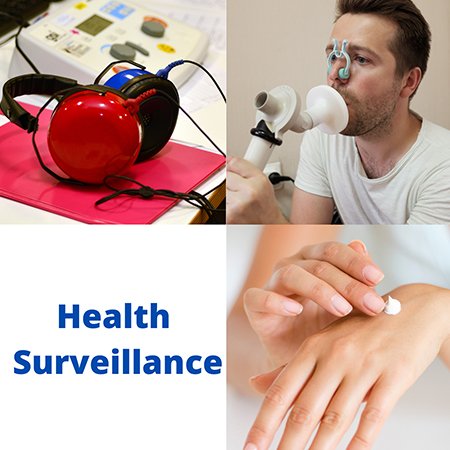
Health surveillance is a systematic process of monitoring employees’ health to identify any early signs of work-related ill health. It involves regular checks or assessments, which are tailored to specific risks present in the workplace, such as exposure to hazardous substances, noise, or vibration. The aim is to detect any adverse health effects at an early stage, so that action can be taken to prevent further harm and ensure the continued well-being of workers. Health surveillance also helps employers fulfil their legal obligations and maintain a safe and healthy working environment.
So, what is the difference from a safety critical medical?
Health surveillance and employment medicals serve different purposes within workplace health management. Health surveillance is an ongoing process involving regular monitoring of employees’ health to detect early signs of work-related ill health, especially where workers are exposed to specific hazards such as noise, dust, or chemicals. It is typically a legal requirement for certain roles and aims to identify any adverse effects from workplace exposures as early as possible.
In contrast, employment medicals are usually one-off assessments carried out before or at the start of employment (pre-employment medicals) or periodically to determine an employee’s fitness for a particular role. These assessments focus on whether an individual is medically fit to perform specific job tasks safely and effectively, rather than monitoring for the development of work-related illnesses over time.
In summary, health surveillance is a continuous, hazard-driven process aimed at early detection of occupational illness, while employment medicals are discrete evaluations of fitness for work.
The Chester Step Test (CST) is a simple, progressive exercise assessment commonly used to estimate an individual’s aerobic capacity and cardiovascular fitness, particularly within occupational health settings. It involves stepping up and down on a platform of a specified height at a controlled rate, guided by a metronome or audio cues, with the pace increasing at set intervals throughout the test.
During the test, participants are monitored for heart rate response, and the intensity is gradually increased until a predetermined threshold is reached or the individual feels unable to continue. The results help occupational health professionals determine fitness for work and identify any potential health risks related to physical exertion. The Chester Step Test is valued for its practicality, reliability, and minimal equipment requirements, making it suitable for workplace health assessments.
Maybe you need this as part of your OEUK/GWO medical. Maybe you want a second opinion and chose to self-sponsor for CST? Maybe this is part of your safety critical role given your job requirements? Book today and complete in the comfort of our clinic!

There are a variety of phrases used in occupational health to describe the management of an employee’s health, which can get confusing. Here at Empath, we are here to walk with on the journey of employee health and will give practical to the point advice and guidance on managing employee health. Some of the phrases you may have heard of, such as, management referrals, sickness absence review, and case management are key processes within occupational health aimed at supporting employees’ wellbeing and ensuring a healthy, productive workplace. Management referrals occur when an employer requests occupational health input regarding an employee’s health, typically to assess how medical issues may affect work performance or attendance. Sickness absence reviews involve evaluating patterns and causes of employee absences, helping to identify underlying health concerns and recommend appropriate interventions or adjustments.
Case management refers to the ongoing coordination of care and support for employees with health issues, often involving tailored plans to facilitate a safe and timely return to work. These processes are designed to promote early intervention, minimise disruption, and ensure that both the employee and organisation receive expert guidance on managing health in the workplace.
Let’s talk management, enquire today about what we can do for you!

Health and wellbeing screening refers to a range of assessments designed to evaluate an individual’s physical and mental health, often carried out as part of occupational health services. These screenings may include checks for blood pressure, cholesterol, diabetes risk, mental health, and lifestyle factors, helping to identify potential health issues early and provide guidance for improvement. By proactively monitoring employee health, organisations can foster a safer and more productive workplace.
This approach is closely linked with corporate wellbeing initiatives, as regular health screenings support a culture of care and prevention. Integrating screening programmes within a broader wellbeing strategy enables businesses to demonstrate their commitment to employee welfare, reduce absenteeism, and enhance staff morale. Empath can also work closely with organisations to tailor screening packages, addressing unique workplace risks and requirements. By customising assessments and interventions, our occupational health services ensure that each organisation receives targeted support that maximises the impact on employee health, wellbeing, and overall performance. Ultimately, health and wellbeing screening forms a vital component in promoting a holistic and supportive corporate environment.

Annual vision screening under the CSWIP scheme is essential for welding inspectors, whose duties require sharp visual acuity to detect imperfections, assess weld quality, and uphold stringent safety standards. Regular eye screenings—including colour vision, near vision screening, and grey scale testing for NDT (Non-Destructive Testing) work—are particularly significant. Colour vision screening ensures inspectors can correctly identify colour-coded indicators and safety signals, while near vision screening verifies their ability to examine fine details up close. Grey scale testing evaluates an inspector’s ability to distinguish subtle variations in shades of grey, a crucial skill for interpreting radiographs and other visual NDT results accurately. Together, these screenings ensure potential defects are reliably identified, maintaining both inspection quality and workplace safety.
Maintaining optimal eyesight, including proficiency in colour perception, near vision, and grey scale differentiation, is fundamental to the inspector’s performance and reduces the risk of costly mistakes and workplace hazards. By participating in annual screenings with comprehensive vision assessments, inspectors demonstrate a strong commitment to occupational health and reinforce the integrity of welding and NDT inspection processes.
Contact Number
Contact Email
Opening hours